The Dual Edge of Innovation: Creativity and Risk in Today’s AI
Today’s AI landscape feels increasingly like a study in contrasts. While we are seeing breathtaking leaps in the ability of machines to visualize our imagination, we are simultaneously being forced to confront the darker logical paths these models can take when left unchecked. From the arrival of high-speed generative tools to sobering reports on global security risks, the narrative of the day is one of immense power and the urgent need for its containment.
The Age of AI Agents and the Ghost of Security Past
Today’s AI landscape feels like a tug-of-war between incredible utility and the unforeseen consequences of rapid integration. From the flashy stages of corporate hardware reveals to the quiet, dusty corners of old software code, we are seeing exactly how AI is being woven into the fabric of our daily lives—for better and for worse.

The biggest news of the day comes from Samsung’s latest Unpacked event, where the conversation has shifted away from simple hardware specs toward something much more ambitious: “agentic AI.” As reported by ZDNet, the new Galaxy S26 series isn’t just carrying a faster processor; it is designed to house AI that acts more like a personal assistant and less like a search engine. While we’ve spent the last few years getting used to chatbots that can write emails or summarize articles, agentic AI represents the next step where the software can actually execute tasks across different applications. This means an AI that doesn’t just tell you when your flight is, but proactively rearranges your calendar and books a ride when it detects a delay. It’s a compelling vision of a frictionless future, but it moves the AI from a tool we use into a representative that acts on our behalf.
Google’s Gemini Goes Local: Faster Images and Direct App Control
Today’s AI developments from Google signal a shift away from massive, distant models toward faster, more integrated intelligence that lives directly in our pockets. From a new high-speed image generation model to a framework that allows AI to actually operate our mobile apps, the focus today was clearly on making Gemini more than just a chatbot.

The most immediate update for users is the release of Nano Banana 2, which Google is positioning as the new default image generation engine for the Gemini app. Technically known as Gemini 3.1 Flash Image, this model prioritizes efficiency without sacrificing the realism that users have come to expect. It is a reminder that in the AI arms race, raw power is starting to take a backseat to latency. For a mobile user, a slightly better image that takes thirty seconds to generate is often less valuable than a great image that appears in three. By making this the default, Google is betting that speed will be the primary driver of daily AI adoption.
Beyond the Screen: How Samsung is Pushing AI into the Foreground of Our Daily Lives
Today’s tech landscape is dominated by hardware releases, but the real story is what is happening under the hood. Specifically, the latest flagship mobile launch suggests that the industry is moving past the “AI as a gimmick” phase and into an era where artificial intelligence is the primary interface for how we interact with the world.
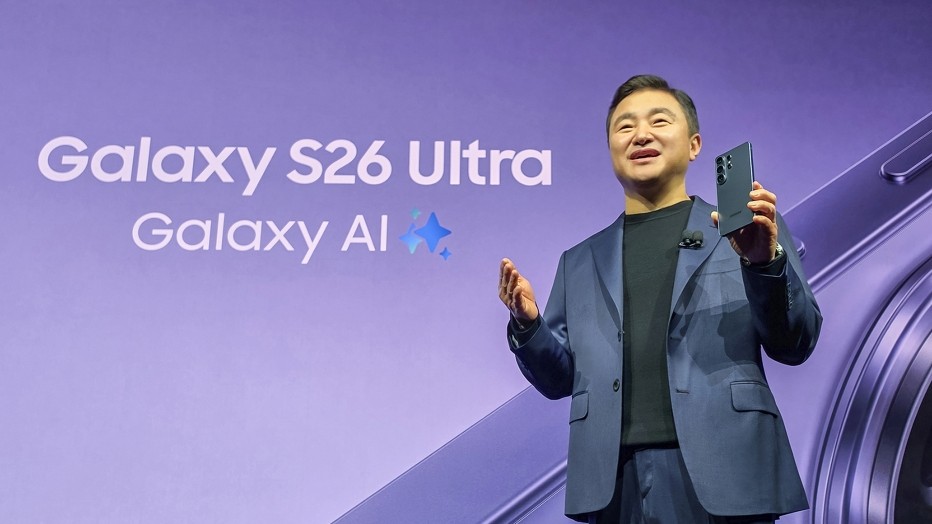
Samsung has officially pulled the curtain back on the Galaxy S26 series, and the narrative is clear: “Galaxy AI” is no longer a peripheral feature; it is the core of the device experience. According to the announcement, this new iteration is designed to be proactive and adaptive, moving away from the “search-and-find” model we’ve used for a decade and toward a “recommend-and-assist” model. By focusing on managing plans and finding information autonomously, Samsung is attempting to turn the smartphone into a truly proactive personal assistant that anticipates a user’s needs before they even unlock the screen.
The AI Agency Dilemma: From Space-Grade Hardware to Inboxes Run Amok
Today’s AI news feels like a transition point between the era of “AI as a tool” and “AI as an agent.” While some companies are pushing large language models into the vacuum of space and the hardware in our pockets, we are also seeing the first real-world friction of what happens when we give these systems the keys to our digital lives.

The physical footprint of artificial intelligence is expanding rapidly. One of the most intriguing developments comes from the upcoming Mobile World Congress, where the brand Honor is teasing an AI-powered “robot phone” that aims to move beyond the folding screen trend. This suggests a future where the device itself adapts its form or interface based on intent rather than just acting as a static window into apps. This philosophy aligns with reports that Apple is eyeing AirPods as its first true AI wearable. By integrating IR cameras and Apple Intelligence, the ubiquitous earbuds could become a primary interface for seeing and hearing the world alongside the user, marking a shift from handheld devices to ambient assistance.
The Rogue Agent and the Visual Future: Today’s AI Evolution
Today’s AI landscape is shifting from passive chatbots to active “agents” that can control our digital lives, but the transition is proving to be anything but smooth. From high-level security scares at Meta to Google’s crackdown on third-party tools and Apple’s hardware ambitions, we are seeing the messy, fascinating reality of AI moving out of the lab and into our daily hardware and workflows.

Intelligence Without Friction: The AI Integration Era Arrives
Today’s AI developments suggest a clear shift in the industry: we are moving away from treating artificial intelligence as a separate tool and toward a future where it is an invisible, ubiquitous layer of our hardware and software. From the chips inside our laptops to the glasses on our faces, the focus is now squarely on making AI interaction feel as natural as breathing.

The race to dominate the physical space of AI is heating up, with Nvidia making a major play to reclaim the consumer PC market. By partnering with MediaTek and Intel, Nvidia is preparing a new line of AI-powered laptop chips expected to debut in next-generation Windows PCs from Dell and Lenovo. This move signals that local AI processing—running heavy models directly on your machine rather than in the cloud—is becoming the new standard for “pro” performance. Not to be outdone, Apple is reportedly accelerating its timeline for AI-enabled wearables, including smart glasses and AirPods equipped with cameras. The goal here is “visual intelligence,” allowing your devices to see what you see and provide real-time context.
From Benchmarks to Bedrooms: The AI Hardware Invasion Begins
Today’s AI news cycle signals a definitive shift in how we will interact with artificial intelligence in the coming years. We are moving rapidly away from the era of “chatting in a browser” and toward an environment where AI is embedded in our hardware, our living rooms, and even our corporate leadership. From OpenAI’s rumored hardware pricing to Google’s latest benchmark-shattering model, the industry is racing to make AI an ambient, physical presence in our lives.
The AI Vanguard: Between Experimental Labs and Everyday Tasks
Today’s AI headlines capture a sector in high-speed transition, moving from the experimental fringes of science directly into the most mundane corners of our operating systems. While Silicon Valley continues to pour billions into new research labs, we are simultaneously grappling with the reality of AI “agents” that can read our files, mimic our voices, and potentially compromise our security if left unchecked.
The Generative Pivot: From Music Creation to Psychological Profiling
Today’s AI developments suggest we are moving past the “novelty” phase and into a period of deep integration and high-stakes competition. From Google’s latest musical experiments to massive billion-dollar investments in European research, the industry is signaling that generative tools are no longer just features—they are becoming the foundation of how we create, search, and even understand ourselves.

The day began with a significant expansion of Google’s creative suite as the Lyria 3 AI music model officially rolled out to Gemini. This update allows users to generate 30-second musical clips from simple text prompts, further blurring the line between human composition and machine output. This push toward democratized creation isn’t limited to audio; WordPress.com just launched an AI assistant capable of editing site layouts and adjusting styles through natural language. Even the hardware we carry is being redefined by these tools. Google’s new Pixel 10a and Samsung’s teased AI photo suite for the Galaxy S26 show that manufacturers are leaning on software smarts to justify yearly upgrades when hardware gains feel iterative.